About Us
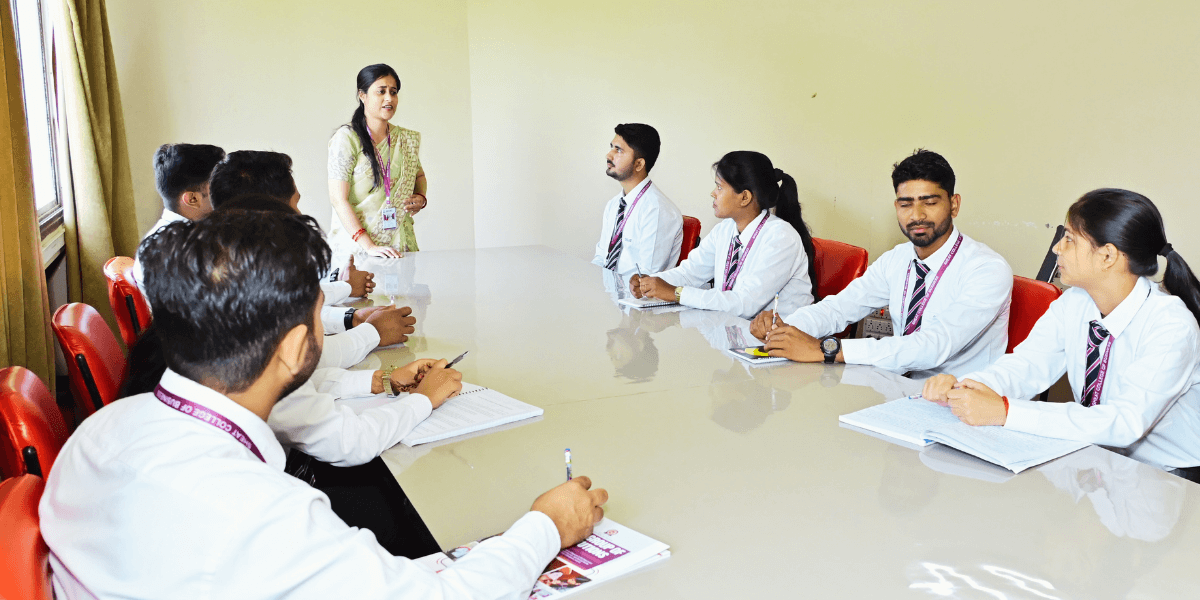
Shaping future innovators at SHEAT
The Department of Computer Science & Engineering at SHEAT College of Polytechnic offers a 3-year (6-semester) Diploma in Computer Science & Engineering, affiliated to the Board of Technical Education, Uttar Pradesh (BTEUP) and approved by AICTE. The department prepares diploma engineers for the growing demand for skilled software, networking and IT support professionals.
Diploma Programme at a Glance
- Programme: Diploma in Computer Science & Engineering
- Duration: 3 years (6 semesters)
- Affiliation: Board of Technical Education, Uttar Pradesh (BTEUP)
- Approval: All India Council for Technical Education (AICTE)
- Eligibility: 10th pass
- Admission: Through the JEECUP entrance examination
- Lateral entry: Direct admission to the 2nd year is open to ITI and 12th (Science) holders, as per BTEUP rules
Subjects, Laboratories & Career Options
Alongside the foundation subjects of the first year, students study programming in C and Python, object-oriented programming, data structures, database management systems, computer networks, operating systems, web technologies, computer architecture and microprocessors, and software engineering.
Practical training is carried out in the programming, database, networking, web technology and computer hardware laboratories, with projects in the final year.
Diploma holders can work as junior software developers, web developers, computer hardware and network technicians, IT support staff or junior engineers in IT and allied industries. After the diploma they can also continue to higher study through lateral entry into the 2nd year of a Bachelor of Technology programme.
Faculty Excellence
The department provides a conducive teaching and learning environment, supported by highly qualified and experienced faculty members. Their expertise supports a teaching methodology that effectively integrates theoretical knowledge with practical application.
- Active participation in Faculty Development Programs (FDPs), seminars, and workshops.
- Close guidance for laboratory practice, diploma projects, and BTEUP examinations.
- Mentoring for careers as junior engineers and technicians, and for lateral entry to higher study.
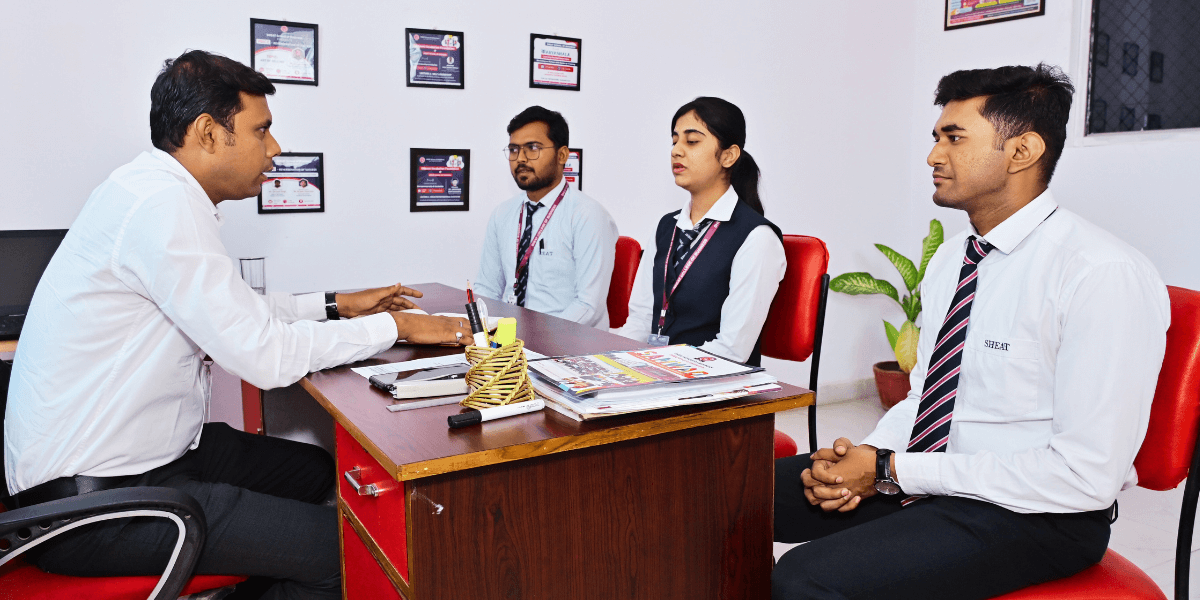
Faculty guiding diploma students in practical training and FDPs
Infrastructure & Facilities
The department is equipped with advanced laboratories and facilities that promote experiential learning.
- Smart classrooms equipped with modern teaching tools
- Advanced laboratories with the latest software and hardware tools
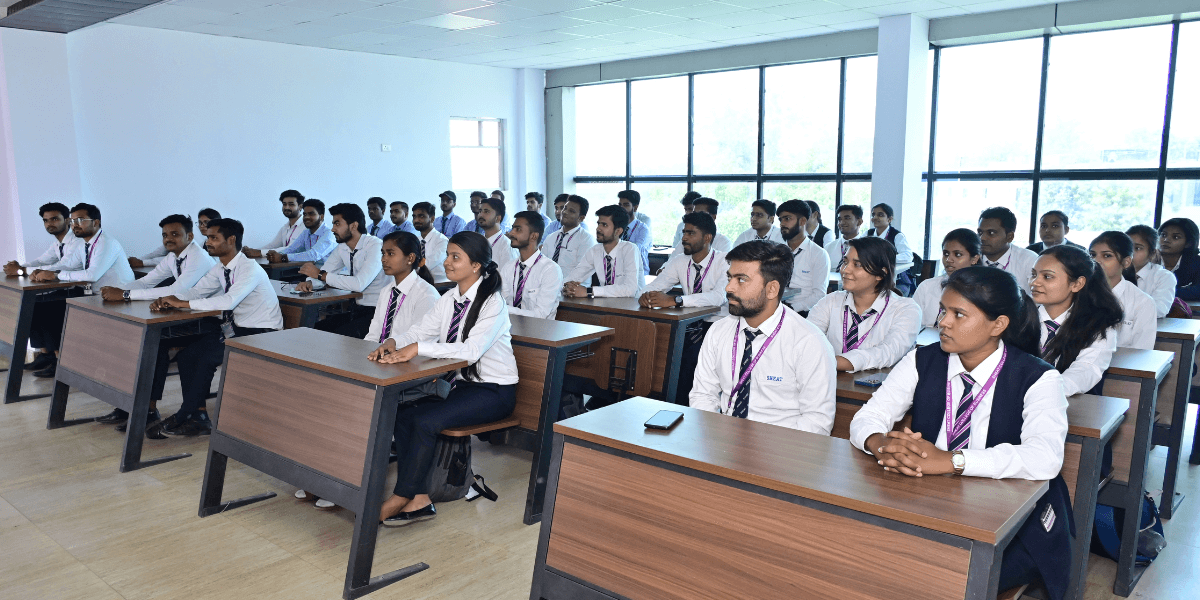
Modern infrastructure supporting learning
Industry Interaction & Career Building
The department bridges the gap between academia and industry through:
- Consistent workshops, guest lectures, and corporate networking sessions
- Industry-oriented summer projects and internship opportunities
- Technical contests and career-oriented skill training programs
These initiatives help diploma students prepare for jobs as junior engineers and technicians in IT and allied industries, and for higher study through lateral entry to Bachelor of Technology programmes.

Industry collaboration and career opportunities
Our Commitment
The Computer Science and Engineering Department at SHEAT is dedicated to equipping diploma students with the essential practical skills for a thriving career in technology. Be a part of our pursuit of excellence and innovation!
Vision & Mission
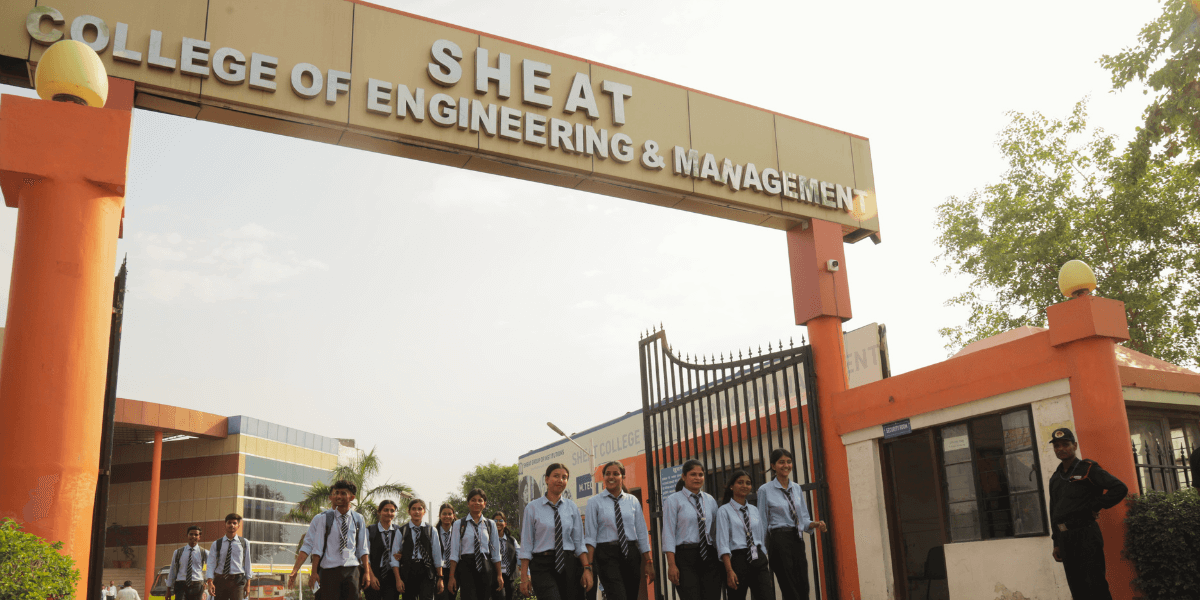
Guiding principles of the Department of CSE at SHEAT
Vision of the Department
To excel in emerging areas of Computer Science and Engineering by imparting knowledge, relevant practices, and inculcating human values to transform students into potential resources for innovative contributions through advanced computing in real-time situations.
Mission of the Department
- Quality Education: To deliver a comprehensive and rigorous curriculum that equips students with the fundamental knowledge and practical skills in computer science and engineering.
- Practical Skills and Innovation: To promote innovation and hands-on learning by encouraging faculty and students to take up practical projects and collaborations with industry.
- Professional Development: To prepare students for successful careers by providing opportunities for internships, industry projects, and professional development activities.
- Ethical and Social Responsibility: To instil ethical values and a sense of social responsibility in students, ensuring they contribute positively to society.
- Lifelong Learning: To foster a culture of lifelong learning and continuous improvement, encouraging students and faculty to stay updated with the latest advancements in the field.
PEOs, POs, and PSOs
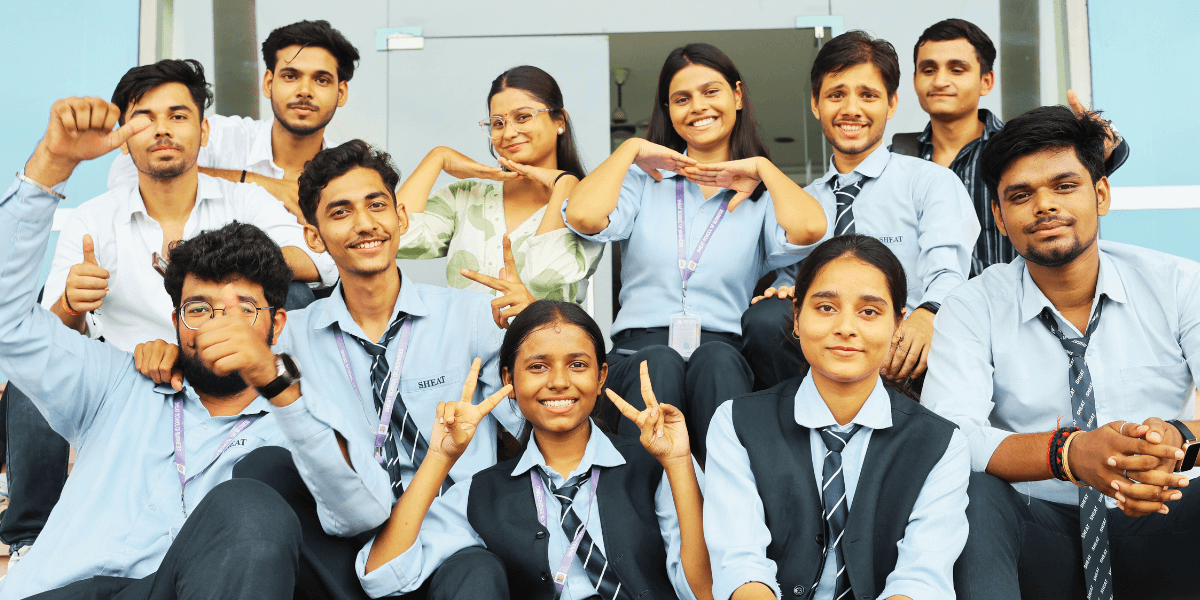
Commitment to excellence in education and research
The Department of Diploma in Computer Science & Engineering at SHEAT Polytechnic is committed to developing technically skilled diploma engineers with strong fundamentals, practical knowledge, professional ethics, and problem-solving abilities. Program Educational Objectives (PEOs), Program Outcomes (POs), and Program Specific Outcomes (PSOs) are designed to prepare students for industry, higher education, and lifelong learning.
Program Educational Objectives (PEOs)
- PEO 1: Technical Competence
Graduates will apply fundamental knowledge of computer science and engineering to solve technical problems in industry and society. - PEO 2: Career Growth and Higher Education
Graduates will pursue successful careers, entrepreneurship, or higher education in computer science and related fields. - PEO 3: Practical Skills and Teamwork
Graduates will work effectively as individuals or team members with good practical, communication, and professional skills. - PEO 4: Ethical and Social Responsibility
Graduates will follow ethical practices and understand their responsibility towards society, environment, and sustainable development. - PEO 5: Lifelong Learning
Graduates will continuously upgrade their knowledge and skills to keep pace with emerging technologies.
Program Outcomes (POs)
- PO1: Basics and Discipline Specific Knowledge
Assimilate knowledge of basic mathematics, science, and engineering fundamentals. - PO2: Problem Analysis and Solution
Identify, analyse, and solve problems using standard methods and established techniques. - PO3: Design and Development
Design solutions for technical problems and assist in designing components, systems, or processes to meet specific requirements. - PO4: Engineering Tools, Experimentation, and Testing
Use modern engineering tools and appropriate techniques to conduct experiments as per BIS standards. - PO5: Socio-Economic and Environmental Impact Assessment
Apply relevant technologies while considering societal needs and environmental impact, keeping sustainable and ethical responsibilities in view. - PO6: Project Management and Communication
Apply engineering management principles, work effectively as an individual or in a team, and communicate clearly on activities. - PO7: Lifelong Learning
Recognize the importance of continuous learning and actively pursue self-improvement to keep pace with technological developments.
Program Specific Outcomes (PSOs)
- PSO1: Apply the fundamentals of programming, data structures, computer networks, databases, and software development to solve basic computing problems.
- PSO2: Use computer hardware, software tools, and emerging technologies to develop, maintain, and manage simple IT-based solutions for industry and society.
Course Curriculum

Comprehensive and industry-aligned curriculum at SHEAT
The Department of Computer Science & Engineering at SHEAT College of Polytechnic offers a 3-year (6-semester) Diploma in Computer Science & Engineering following the curriculum prescribed by the Board of Technical Education, Uttar Pradesh (BTEUP). The curriculum covers foundation subjects in the first year and core computing subjects such as programming, data structures, databases, networks and web technologies in the following years. Below are the course details for the Diploma in Computer Science & Engineering, available for download.
Curriculum Details
It is structured to provide a balanced blend of theory and practical work, preparing students for careers as junior engineers and technicians in software development, networking and IT support. Admission to the 1st year is through the JEECUP entrance examination for 10th pass candidates, and ITI and 12th (Science) holders may join the 2nd year through lateral entry as per BTEUP rules. Download the detailed syllabus for each year below.
| S.No | Course | Branch | Year | Download |
|---|---|---|---|---|
| 1 | Diploma | Computer Science & Engineering | 1st Year (Semesters 1 & 2) | Download |
| 2 | Diploma | Computer Science & Engineering | 2nd Year (Semesters 3 & 4) | Download |
| 3 | Diploma | Computer Science & Engineering | 3rd Year (Semesters 5 & 6) | Download |
Faculty of Computer Science & Engineering
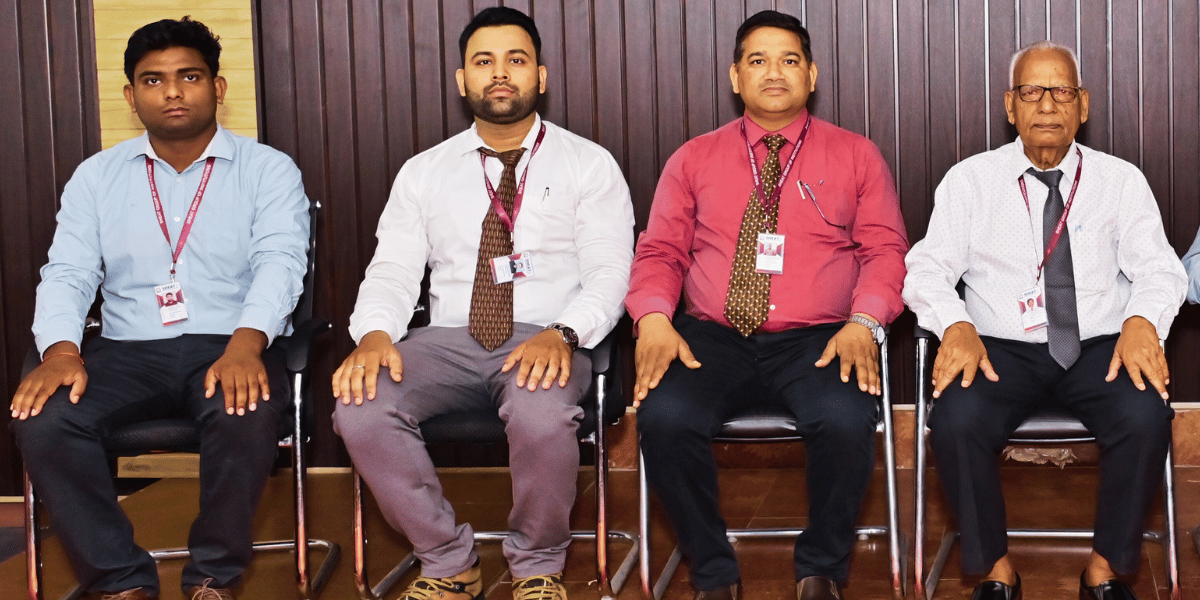
Highly qualified and experienced faculty guiding future innovators
The Faculty of Computer Science and Engineering at SHEAT College of Polytechnic comprises highly qualified and experienced professionals who guide diploma students toward academic excellence and professional success. Our faculty members are committed to fostering practical skills, project work and technical competence in computer science education.
Faculty Details
| S.No | Name | Designation | Qualification |
|---|---|---|---|
| 1 | Mr. Sandeep Kumar Singh | Head of Department | Master of Technology, Ph.D (Pursuing) |
| 2 | Mr. Alok Kumar Gupta | Asst. Professor | Master of Technology |
| 3 | Mrs. Reena Mishra | Asst. Professor | Master of Technology |
| 4 | Mrs. Bharti Kumari | Asst. Professor | Master of Technology |
| 5 | Mrs. Akanksha Singh | Asst. Professor | Master of Technology |
| 6 | Mr. ShivGovind | Asst. Professor | Master of Technology |
| 7 | Mr. Mukesh Yadav | Asst. Professor | Master of Technology |
| 8 | Mr. Babu Udal Ji Suman | Asst. Professor | M.C.A |
| 9 | Mr. Ravindra Sharma | Asst. Professor | M.C.A |
| 10 | Mr. Praveen Kumar Singh | Asst. Professor | M.C.A |
| 11 | Mr. Ankit Srivastava | Asst. Professor | M.C.A |
Computer Science & Engineering Laboratories
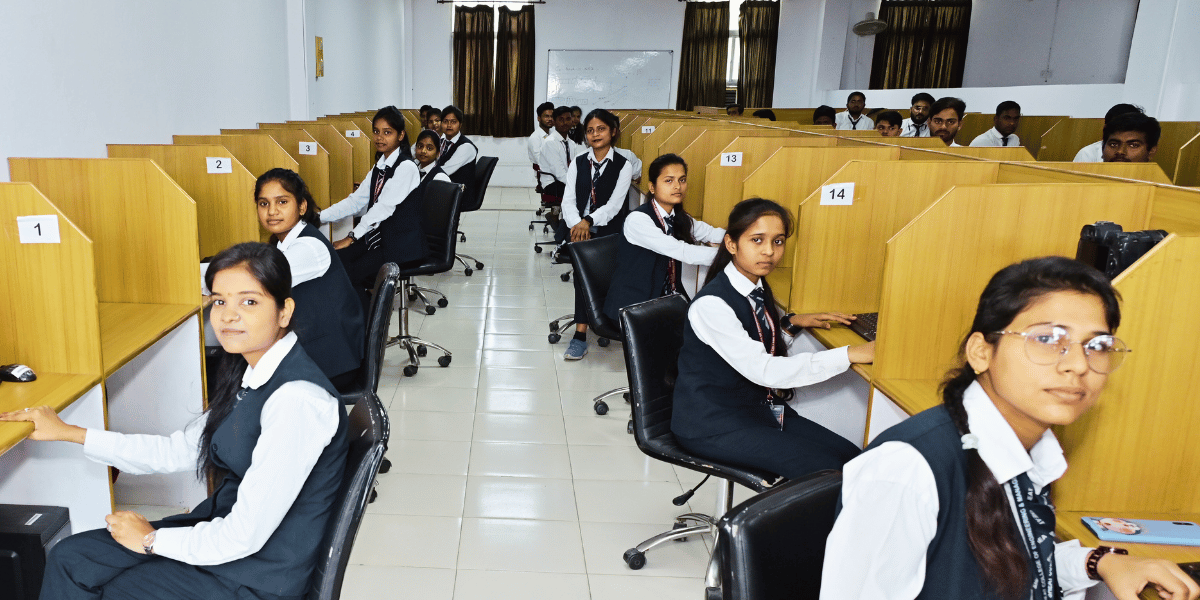
State-of-the-art labs fostering innovation and research
A Computer Science and Engineering lab serves as an interactive center where students investigate, experiment, and innovate in the field of technology. Equipped with state-of-the-art computers, software applications, and hardware tools, these labs provide a dynamic space for experiential learning and the practical application of theoretical principles.
Within this environment, students actively engage in activities such as coding assignments, software development, network simulations, and hardware design and testing. The departmental laboratories also support research exploration and project-based learning, enabling students to explore emerging technologies and contribute to technological advancements. These labs foster creativity, innovation, and academic growth, preparing students for successful careers in the ever-evolving field of Computer Science and Engineering.
Advanced Training Programs
- AIML (Artificial Intelligence & Machine Learning): Build intelligent systems using AI techniques, deep learning, NLP, and more.
- AIRO (AI & Robotics): Integrate AI with robotics, automation, and embedded systems for real-world solutions.
- MERN Stack: Master full-stack web development using MongoDB, Express.js, React, and Node.js.
Computer Science & Engineering Labs
1. Curriculum-Based Labs
- Programming & OOP Labs: Support languages like C, C++, Java, Python, data structures, and object-oriented programming.
- Operating Systems & System Software Labs: Focus on OS concepts, shell programming, LEX/YACC tools, etc.
- Data Structures, Algorithms & Design Labs: Hands on algorithm design and performance analysis.
- Database / DBMS Labs: Use ORACLE, SQL, databases, normalization concepts.
- Web Technologies / Multimedia Labs: Cover web development, MVC frameworks, client-server, HTML/CSS/JavaScript, etc.
2. Advanced / Specialized Instructional Labs
- AI, Machine Learning & Data Science Labs: For explorations in ML, AI, computational genomics, data analysis, and business analytics.
- Networks, IoT & Embedded Systems Labs: Focus on routers, switches, IoT devices, sensors, Raspberry Pi, Arduino, etc.
- Project / Innovation Laboratories: Open-access spaces where students work on capstone projects, prototypes, and creative ideas.
- Hardware, Assembly & Computer Center Labs: Equip students for learning hardware assembly, microprocessors, and system integration.
3. Research-Oriented & Specialized Labs
- Research & Development (R&D) Labs: Support faculty-student collaboration on real-world/academically advanced problems.
- Altair Software Lab: Transforms an academic department into a cutting-edge innovation hub—bridging simulation, analytics, and real-world engineering workflows.
Training Modules
1. Core Programming & Software Engineering
- Languages: C, C++, Java, Python, Go
- Software Engineering Practices: Agile, DevOps, CI/CD
- Version Control: Git, GitHub, GitLab
2. AI, Machine Learning & Data Science
- Foundations: Probability, Linear Algebra, Statistics for ML
- Tools & Frameworks: TensorFlow, PyTorch, Scikit-learn, Jupyter
- Applications: NLP, Computer Vision, Deep Learning
- Projects: Real-time AI model deployment (via Flask, FastAPI)
3. Web & Mobile Application Development
- Frontend: HTML, CSS, JavaScript, React
- Backend: Node.js, Django, Flask
- Full-Stack (MERN/MEAN)
- Mobile: Flutter, Android Studio (Java/Kotlin)
4. Cloud Computing & DevOps
- Platforms: AWS, Microsoft Azure, Google Cloud Platform
- DevOps Tools: Docker, Kubernetes, Jenkins, Terraform
- Training Modules: Infrastructure-as-Code, CI/CD pipelines
5. Data Structures & Algorithms (DSA)
- Competitive Programming: Codeforces, LeetCode, HackerRank
- Industry-Prep Training: Problem solving rounds for placements
6. IoT, Robotics & Embedded Systems
- Platforms: Raspberry Pi, Arduino, ESP32
- Protocols: MQTT, Zigbee, BLE
- Integration: AI + IoT (AIoT)
Industry Linkages & Collaborations
| Industry Partner | Focus Area |
|---|---|
| ICT Academy | Certification courses on Professional Skills, Full-Stack, Data Analytics, Cloud, DevOps, Cybersecurity, IoT, Networking |
| Altair Engineering | Simulation, AI-Driven Engineering |
| IBM SkillsBuild | AI, Quantum Computing, Data Analytics |
| Amazon AWS Academy | Cloud, DevOps, Serverless |
Academic Calendar
Plan your academic year with the SHEAT academic calendar
Stay updated with the official academic schedules. Download the SHEAT Academic Calendar 2025-26 below.
Academic Calendar Downloads
| S.No | Calendar | Session | Download |
|---|---|---|---|
| 1 | SHEAT Academic Calendar | 2025-26 | Download |